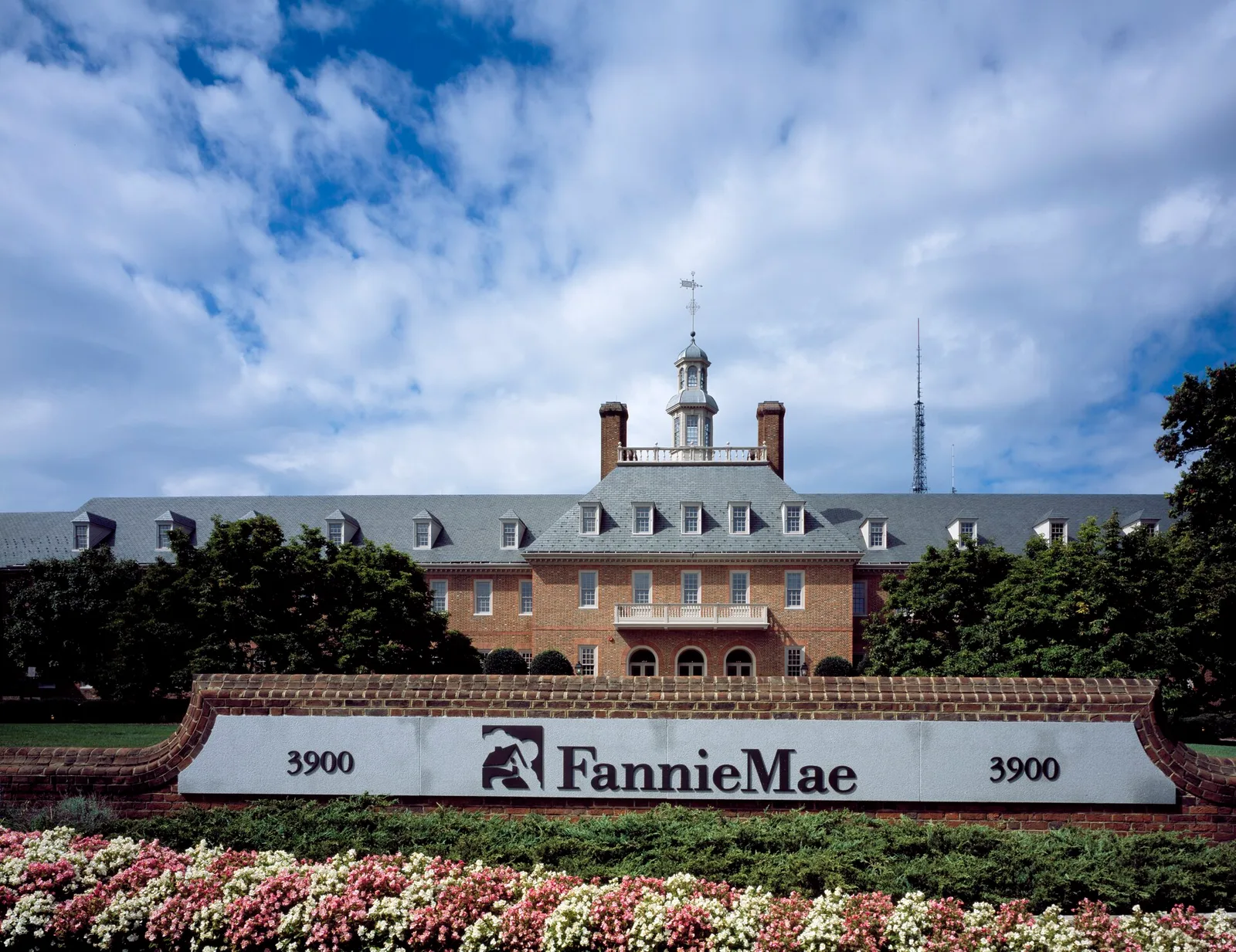
For over a year, Washington has floated one of the largest public offerings ever discussed: selling shares of Fannie Mae and Freddie Mac, the two mortgage giants that have sat in government conservatorship since 2008. This summer the plan hit visible turbulence. CNN Business reported on June 5 that the administration's spin-off effort faces new uncertainty after Bill Pulte, the housing regulator in charge of making the deal happen, was handed a second job as the acting head of the nation's intelligence agencies. For anyone with a mortgage, or shopping for one, the question is what this stall actually means.
What Fannie and Freddie do, in plain terms
Fannie Mae and Freddie Mac do not lend money to homebuyers directly. They buy mortgages from lenders, package them into securities, and guarantee investors against default. That guarantee, backed since 2008 by government conservatorship, is a major reason American borrowers can get a 30-year fixed-rate loan at all, and it helps keep the rate on that loan lower than it would otherwise be.
Because the two companies stand behind such a large share of the mortgage market, any change to their ownership structure ripples out to the rate quoted on an ordinary home loan. That is why an IPO that might sound like a Wall Street story is really a housing story.
The plan, and why it wobbled
The Wall Street Journal reported in 2025 that the administration was preparing to sell between 5 and 15 percent of the companies' shares at a combined valuation of roughly $500 billion, a sale that could raise about $30 billion. Pulte, director of the Federal Housing Finance Agency, later told reporters the companies would remain in conservatorship even as the government sold up to 5 percent of shares, according to HousingWire.
Then the signals began to soften. In February, Pulte said of the offering, "We don't have to do that," and stressed that the final decision belongs entirely to the president, as reported by Weekly Real Estate News. On June 2, the president named Pulte acting Director of National Intelligence, replacing Tulsi Gabbard, while keeping him at FHFA. Under federal vacancy rules, an acting director can serve only about 210 days without Senate confirmation. CNN Business reported that the dual appointment led many observers to doubt the spin-off will proceed, since the official responsible for executing a $500 billion offering now also oversees agencies like the CIA and NSA. Susan Wachter, a Wharton School professor of real estate and finance, told CNN that the privatization efforts appeared to have stalled. The president himself said an IPO remains on the table but added, "It's not a rush."
What the market is saying
Investors have voted with their money. Shares of Fannie Mae and Freddie Mac, which trade over the counter, have fallen roughly 40 percent so far this year according to coverage from TheStreet and Barchart. Freddie Mac stock touched a 52-week low of $3.40 back in March, per Barchart, and although both stocks have clawed back some ground since then, with Barchart noting a multi-day winning streak for Fannie Mae shares in mid August, the year-to-date decline remains steep. Those declines reverse much of the run-up that followed early privatization talk, and they reflect a simple reassessment: the market sees the offering as delayed, diluted, or possibly shelved.
Survey data points in the same direction, though it is worth dating it honestly. A JPMorgan survey of agency mortgage bond investors conducted in January 2025, covered by Barchart, found that 49 percent expected privatization by 2028 while 26 percent said it would never happen at all. That poll predates this summer's stall, and the price action since suggests skepticism has only deepened.
Why the stall matters for mortgage rates
Here is the part that matters for households rather than shareholders. Analysts have consistently warned that privatization done poorly, meaning a release from conservatorship without a clear government guarantee, would push mortgage rates up. U.S. News and The Mortgage Reports have cited estimates ranging from a quarter of a percentage point to a full percentage point added to mortgage rates if a full privatization happened too fast. The bond manager Pimco issued a similar warning, saying a sale could drive up U.S. mortgage rates. The logic is straightforward: investors accept lower yields on mortgage securities because of the government backstop, and if that backstop weakens, they demand more, and borrowers pay the difference.
Seen through that lens, the current stall is not bad news for borrowers. As long as the companies stay in conservatorship, the guarantee question stays settled and the rate risk stays theoretical. Freddie Mac's August 13 Primary Mortgage Market Survey put the average 30-year fixed rate at 6.67 percent, down slightly from 6.69 percent the week before, with the 15-year fixed at 5.96 percent. A year earlier the 30-year averaged 6.58 percent. Rates have been remarkably stable through all of the IPO speculation, which suggests the bond market never fully priced in a near-term privatization.
Who carries the most exposure
Rate sensitivity scales with loan size. Fannie and Freddie stand behind conforming loans, so the borrowers with the most at stake are the ones financing a home with a conforming mortgage, and the dollar impact of any rate move grows with the balance. Even the low end of the analyst estimates, a quarter of a percentage point, compounds into real money over the 30-year life of a loan, and the effect is largest for buyers stretching to the top of their budget.
Cash buyers are insulated from the question entirely, since they never touch the mortgage market. Renters are not fully sheltered, though. When financing costs and uncertainty rise, some would-be buyers stay in the rental pool longer, and that added demand tends to show up in rents over time. A change in how the mortgage market is guaranteed would eventually reach households that never sign a loan document.
What buyers and homeowners should take from this
First, nothing has changed for your loan today. Conforming loans are still being purchased and guaranteed exactly as before, and the August Freddie Mac survey shows rates holding in the mid 6 percent range.
Second, the privatization question is a reason to pay attention, not a reason to act. The scenario that would push rates up, a fast release without a guarantee, looks less likely now than it did a year ago given the stalled timeline CNN Business described. If the effort revives, it will come with months of public signals, and the structure of any guarantee will matter far more than the IPO headline.
Third, if you are financing a large loan balance, treat rate risk as part of your planning rather than a surprise. Locking a rate when you are under contract, comparing lender quotes on the same day, and understanding where your loan sits relative to conforming limits are all more valuable in a market where policy can move rates independently of the Federal Reserve.
The bottom line
The Fannie and Freddie IPO was pitched as a $500 billion event. Right now it is a stalled one. The regulator running it is also serving as the acting head of national intelligence, the president says there is no rush, and the companies' shares have given up roughly 40 percent this year as investors mark down the odds. For homeowners and buyers, the stall preserves the status quo, and the status quo, a guaranteed mortgage market with 30-year rates near 6.67 percent per Freddie Mac's latest survey, is the version of this story most borrowers should prefer. Watch the structure of any future deal, not the headlines about its size.